
Harry West
Data analyst, fantasy sport expert



Quantium data analyst Harry West takes a look at how the new ruck rules will change our Supercoach sides.
AFL
Data analyst, fantasy sport expert
February 12, 2026
I’m nervous about rucks this year.
I’ve been set-and-forget for years. Pick two premiums, focus my value generation in other lines, cruise through without burning ruck trades. It’s worked. It’s boring. It’s reliable.
But 2026 has me second-guessing. The AFL has dropped the biggest ruck rule changes in a decade. I wanted to see if this had happened before – whether history could tell us what to expect.
Turns out it has. And it wasn’t pretty.

Four rule changes target stoppages for 2026:
Centre bounce replaced by ball-up. The centre bounce is gone. Every centre restart gets thrown straight up.
Centre ball-up ruck engagement rule. At centre ball-ups, rucks can’t cross the centre circle line before contesting. You can jump early, take their space, but you can’t physically engage before the contest. Around-the-ground stoppages stay unchanged.
Ruck nomination relaxed. Umpires can restart play without waiting for rucks. If your ruck is too far away, the ball goes up anyway.
Last disposal out of bounds. A free kick is awarded when the ball crosses the boundary from a disposal between the 50m arcs. The AFL estimates this eliminates roughly 3 boundary throw-ins per game.
The AFL’s goal: reduce stoppages back to 2023-24 levels. They’re projecting roughly 67 stoppages per game.
The SuperCoach problem? If stoppages drop, hitout volume drops. Hitouts per team per game peaked at 43.0 in 2015, fell to 37.7 in 2024, then climbed back to 39.3 in 2025. If the AFL succeeds in cutting stoppages, we could see volumes drop again. And we know what happened last time the ruck landscape shifted.
Embed from Getty Images2015 was peak hitout volume. Todd Goldstein became the first player in VFL/AFL history to crack 1,000 hitouts in a season. He averaged 44.1 hitouts per game and 128.1 SuperCoach points. Aaron Sandilands averaged 43.4 hitouts and 107.5 points.
Then 2016 happened:
| Player | HO/Game 2015 | HO/Game 2016 | SC Avg 2015 | SC Avg 2016 | SC Change |
| Aaron Sandilands | 43.4 | 29.0 | 107.5 | 70.8 | -36.7 |
| Stefan Martin | 32.5 | 27.9 | 110.8 | 89.7 | -21.1 |
| Todd Goldstein | 44.1 | 36.5 | 128.1 | 108.9 | -19.2 |
| Sam Jacobs | 37.4 | 31.9 | 107.3 | 88.1 | -19.2 |
| Matthew Kreuzer | 21.2 | 20.4 | 89.3 | 73.1 | -16.2 |
| Shane Mumford | 38.5 | 34.7 | 105.7 | 97.3 | -8.4 |
| Max Gawn | 37.3 | 42.2 | 102.1 | 118.5 | +16.4 |
| Nic Naitanui | 34.0 | 34.5 | 101.6 | 105.9 | +4.3 |
Sandilands lost 36.7 points per game. Goldstein fell from 128 to 109. The pure tap specialists got destroyed.
But not everyone suffered. Nic Naitanui went UP 4.3 points. Max Gawn had a breakout, jumping from 102 to 118. Both were mobile rucks who scored around the ground – marks, contested possessions, transition work.
They thrived. The tap specialists who lived at stoppages? Hammered.
Were stoppages the only reason? Probably not – there were likely multiple factors. But the correlation is hard to ignore. If stoppages drop, rucks who get most of their stats at stoppages take a hit. Mobile rucks who score in varied ways benefit.
That’s the 2026 worry.
Embed from Getty ImagesIf the 2026 rules reduce stoppages, some rucks are more exposed than others. Here’s the 2025 landscape:
| Player | Team | SC Avg | HO/Game | HTA/Game |
| Max Gawn | Demons | 127.4 | 35.9 | 10.0 |
| Tristan Xerri | Kangaroos | 127.0 | 35.0 | 10.3 |
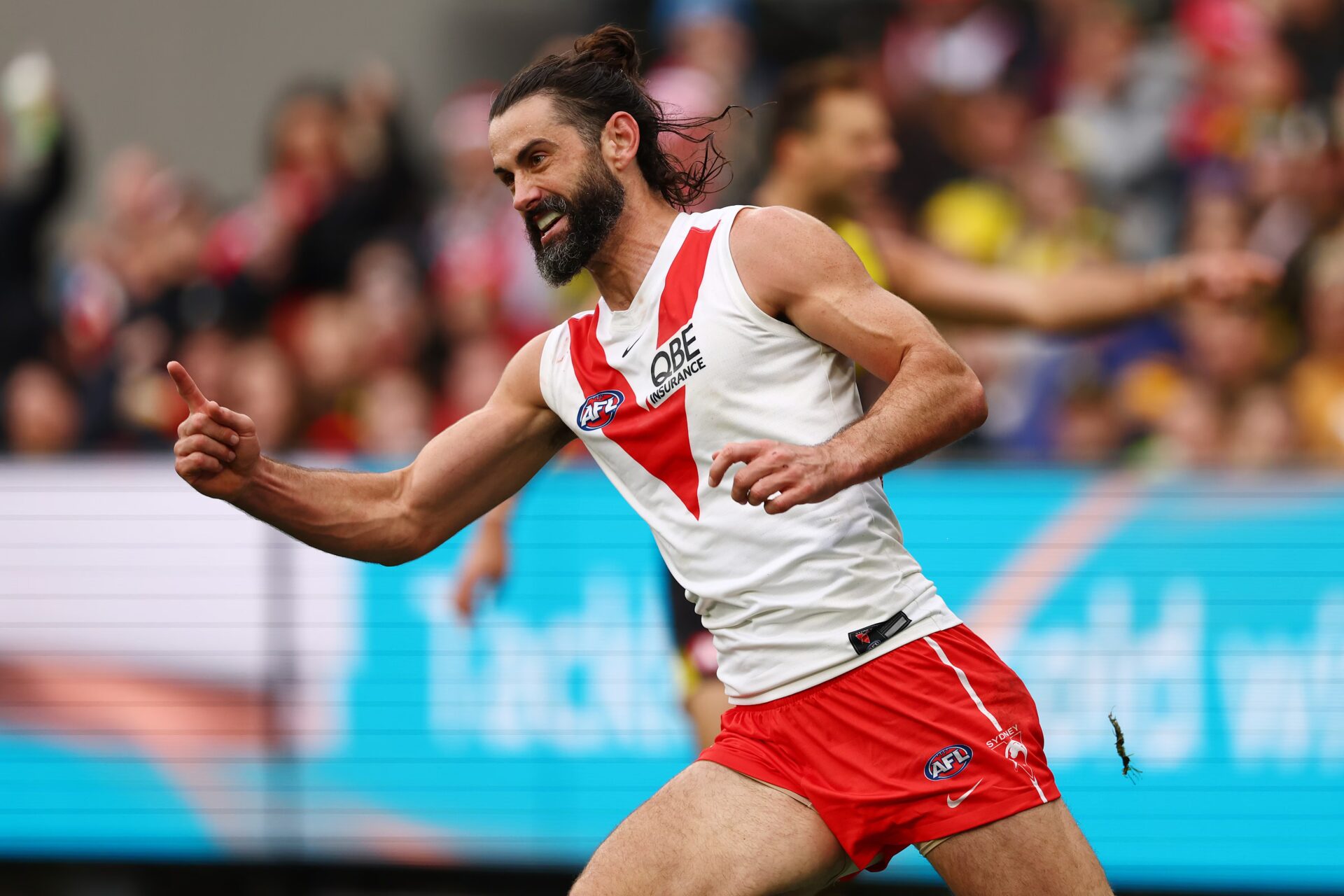
| Brodie Grundy | Swans | 125.3 | 36.7 | 10.7 |
| Luke Jackson | Dockers | 113.0 | 21.8 | 6.5 |
| Timothy English | Bulldogs | 111.0 | 30.3 | 8.5 |
| Jarrod Witts | Suns | 105.0 | 43.3 | 11.3 |
| Lloyd Meek | Hawks | 101.7 | 37.9 | 10.2 |
| Toby Nankervis | Tigers | 97.9 | 33.0 | 9.0 |
| Reilly O’Brien | Crows | 96.9 | 38.9 | 10.6 |
| Tom De Koning | Blues | 96.9 | 23.3 | 7.0 |
Witts (43.3 HO/game), O’Brien (38.9), Meek (37.9). If stoppages drop 5-10%, does Witts’ volume fall enough to hurt his 105 average? Does O’Brien’s sub-100 scoring get worse?
There’s also a quality problem. SuperCoach penalizes bad taps. Research by Jaiden at Stats by Jaiden shows hitouts-to-advantage are worth around 4.2 points, while hitouts-to-opposition cost you 0.6-0.7 points. If the centre-circle engagement rule forces more athletic jumping contests, do these rucks’ hitout-to-advantage rates drop while their hitout-to-opposition rates climb?
That’s the double penalty. Fewer contests to attend, and the contests they do attend become harder to win cleanly.
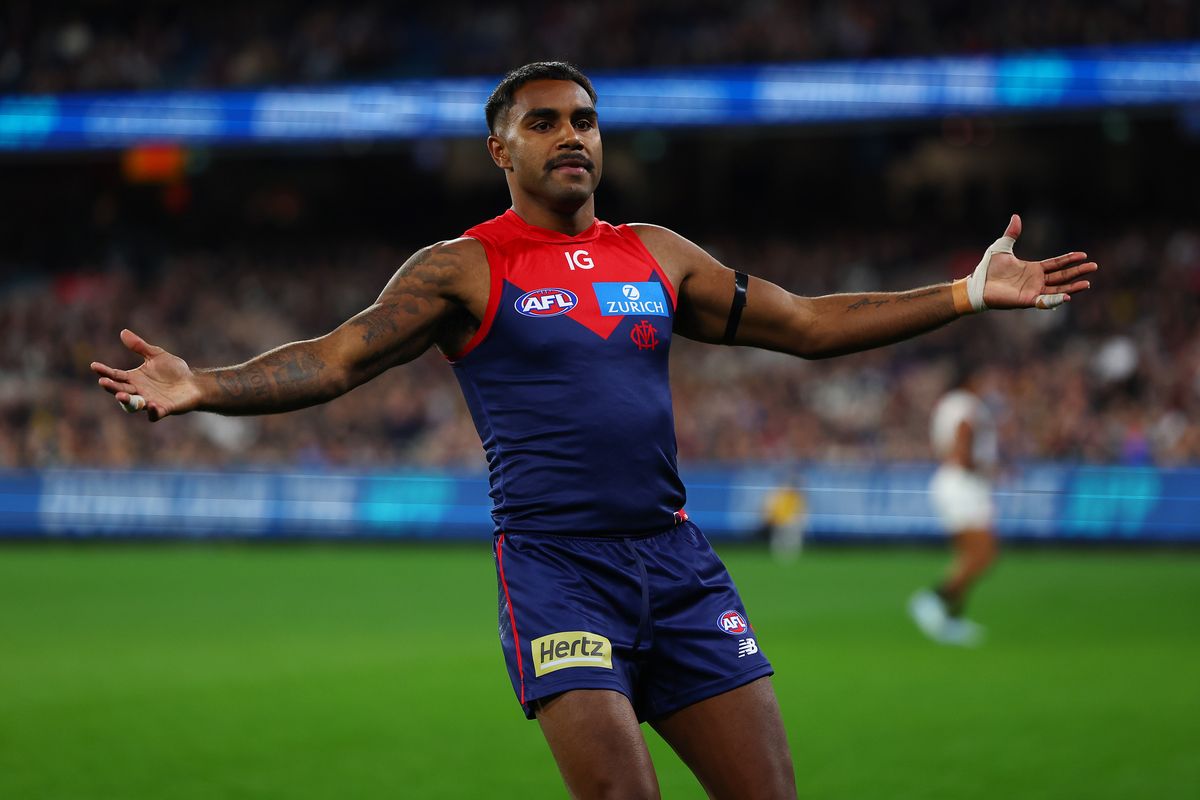
Embed from Getty ImagesGawn (127.4), Xerri (127.0), Grundy (125.3) all combine strong hitout-to-advantage with elite around-the-ground work. They’re not just winning taps – they’re winning quality taps that hit targets.
But if stoppages drop, they lose opportunities too. Unless they increase their around-the-ground work to compensate, they’ll still come back in scoring. Maybe not 2016 Sandilands levels, but enough to make their prices look expensive.
Embed from Getty ImagesJackson (21.8 HO/game) and De Koning (23.3 HO/game) score through transition, marks, ground work. They avoid the hitout-to-opposition penalty by not contesting unless they can win it clean. Fewer stoppages might actually help them if it means more ball movement.
English (111.0 avg) sits in between – decent hitout volume but scores heavily around the ground when the ball hits the deck.
I’m not saying avoid the premiums. But we need to be realistic. If stoppages drop, even the best rucks will feel it.
Embed from Getty ImagesI’m watching Round 0 for one thing: stoppage counts.
If they drop noticeably, every ruck is at risk. High-volume tap rucks like Witts and O’Brien are most exposed. Elite premiums like Gawn and Grundy will likely come back unless they compensate elsewhere. Mobile types like Jackson might hold up better if the game opens up.
If stoppages stay flat and scoring patterns hold, maybe I’m overthinking this.
But here’s the wild thought: what if the play isn’t to pick the safest rucks, but to go cheap? If the big dogs all lose value due to fewer stoppages, they’ll drop in price. That creates upgrade opportunities. Start with value rucks, bank the cash, then upgrade once we see who holds their scoring and who doesn’t.
It might be the end of set and forget. Not because the strategy is wrong, but because 2026 makes it too risky to lock in expensive rucks before we know how the new landscape shakes out.
The beauty of Round 0? It’s before lockout. We get to see the new rules in action, see what happens to stoppage counts and ruck scoring, then adjust our teams. No trades wasted. No regrets.
Maybe I’m jumping at shadows. Or maybe Round 0 shows us the ruck position just became the most important decision of 2026.
Leave a Reply
You must be logged in to post a comment.