Matty G
NBA Supercoach and NBA Fantasy Basketball analyst | Follow @nbageewhiz on X and Instagram



What Christopher Nolan and Greek Mythology have to do with bloody fantasy basketball, writes Matty G
NBA
NBA Supercoach and NBA Fantasy Basketball analyst | Follow @nbageewhiz on X and Instagram
October 12, 2026
Since the conclusion of the last NBA season, we have experienced the global phenomenon that is The Odyssey in cinemas (excuse me… in IMAX). Apparently the story of one man enduring a very long and disastrous journey home from war demands to be seen on a screen approximately the size of Ithaca.
At its heart, Homer’s Odyssey is exactly that: Odysseus attempting to return home after the Trojan War. What should be a relatively straightforward voyage instead becomes a decade-long exercise in patience, strategy, misfortune, and circumstances spectacularly beyond his control. He survives monsters and shipwrecks, navigates the whims of gods and repeatedly gets close to home only for another obstacle to emerge.
It all feels strangely familiar.

There are Supercoach seasons that feel less like playing a game and more like trying to get home from Troy. We spend the offseason poring over rankings and projections, identifying players we think the market has mispriced and constructing elaborate plans for our lineups night. Then we spend six months navigating whatever the basketball gods decide to throw at us.
For all the parallels with Homer, perhaps the most appropriate connection to Greek mythology comes from another hero of the Trojan War. Achilles was the great warrior with the singular vulnerability that could bring him undone. Thousands of years later, his name remains attached to the body part that seems determined to ruin NBA seasons with increasing regularity.
There is probably a joke in there, but soft tissue injuries in the NBA are a sad state of affairs.
Embed from Getty ImagesSuperCoach has always involved injuries. Anyone who has played fantasy basketball, for example, can recite a list of teams destroyed by them, usually with the solemnity of someone reading names from a war memorial. But availability increasingly feels less like one variable in player evaluation and more like one of the defining variables of the modern fantasy game.
According to injury analyst and certified athletic trainer Jeff Stotts, NBA players missed 6,779 games through injury or illness during the 2024–25 regular season. That total had surpassed 6,000 only once previously in his tracking, during the pandemic-affected 2021–22 season. During January in the 2025-2026 NBA season, players had already missed 3,185 games, approximately eight per cent more than at the corresponding point of the previous season.
The 65-game threshold provides another striking illustration. Only 86 players met the NBA’s 65-game awards-eligibility threshold during the 2025–26 season. Awards eligibility isn’t identical to simply appearing in 65 games because of minutes requirements and exemptions, but Basketball Reference lists 582 players who appeared in at least one regular-season game. Those 86 represent roughly 14.8 per cent of the player pool. That’s around one in seven players.
For a game in which the best ability is so often availability, that’s a confronting statistic.
Embed from Getty ImagesAnd before we’ve even played meaningful basketball in 2026–27, the injury report is already required reading. Jusuf Nurkić is gone for around a month. Coby White, who some SuperCoaches were looking at bringing in, now enters the season with a calf strain. POD Brandon Ingram’s return to La-La Land with the Clippers has been delayed by a partially torn Achilles. Even LeBron James, whose longevity has spent two decades making the normal rules of ageing seem optional, has sciatica and chronic arthritis in his left foot complicating his Philadelphia debut. The injuries are mounting up quickly.
We know the risks. We study injury histories and convince ourselves we’ve built sufficient durability into our rosters. Then the healthy player we selected because he doesn’t have an injury history lands on someone’s foot and misses six weeks, while the bloke we avoided because he was “too risky” plays 74 games.
There are limits to how much control we have.
Which brings us to another Greek story.
Embed from Getty ImagesSisyphus was a king renowned for his cunning and repeated attempts to outwit the gods and even death itself. Clever, stubborn, and seemingly convinced he could find an edge in every situation, he would have been an absolute nightmare in trade negotiations.
Eventually, the gods had enough. Sisyphus was condemned to push an enormous boulder up a hill. Every time he approached the summit, the rock would escape him and roll back down, leaving him to descend after it and begin again.
Every October, we SuperCoaches put our hands on the boulder. We trade, work the boosts, and spend months inching the boulder that is our team higher. Then comes the late scratch, the rolled ankle or the star who has been available all season being shut down precisely when you need them.
Truth is, for all but one SuperCoach, no matter what league or the public one you’re in, the boulder eventually rolls back down.
The cruel joke is that it rolls back down for the champion too. They get a little longer at the summit with the championship, but next October their roster disappears along with everyone else’s, and it all resets. New players emerge. Old players decline.
The rock is waiting at the bottom again.
And voluntarily, inexplicably, we put our hands back on it.
In 1942, Albert Camus wrote an essay, The Myth of Sisyphus. He used the story to examine the absurd: broadly, the collision between our desire for meaning and order and a world that guarantees neither (already sounding like managing a SuperCoach side, right? Alby was clearly ahead of his time).
Sisyphus knows the rock will fall. There is no final push that permanently completes his task. Yet Camus arrives at his famous conclusion: “One must imagine Sisyphus happy.” The absence of a permanent destination doesn’t make the journey itself meaningless. Meaning can exist in the struggle.
Which is an admittedly ridiculous amount of existential philosophy to bring to a conversation about making a trade in a low-volume game week SuperCoach week.
But it gets remarkably close to why we keep playing SuperCoach and fantasy basketball.
We say we play to win, and of course we do. But if victory were the only thing providing meaning, most of us should have abandoned this “hobby” years ago.
Instead, the reward is scattered all the way up the hill: finding the cash cow before everyone else, pulling off the trade on a POD that explodes, beating the SuperCoach who’s been talking rubbish since October.
If we ever actually solved SuperCoach, I suspect we’d ruin it.
I was reminded of that this year by a fantasy league that almost didn’t happen.
Embed from Getty ImagesMore than a decade ago, I inherited the role of commissioner of a fantasy basketball league on what was supposed to be a temporary basis. The temporary part has lasted more than ten years.
By the way, Teddy, the job remains yours whenever you want it back.
This year, for the first time, I seriously considered folding the league. I’m already in more fantasy leagues than any sensible adult probably needs, and a couple of managers were understandably tight cash-wise when the conversation turned to upping the ante. If they pulled out, I’d need replacements, probably mates of mates, and suddenly keeping the league alive felt more like administration than fun.
I do SuperCoach; I play in other leagues with some of the guys anyway. Perhaps this one had simply run its course. It could quietly sail off into the night after more than a decade of drafts, trades, arguments and questionable managerial decisions.
More than anything, I didn’t want to push the boulder up the hill again.
Then my phone went off.
Another Matt (one of my favourite rivals and one of the blokes who make the league what it is) had fired a message into the group chat:
“When we are doing draft order, Commish?”
Naturally, he’d added the @ tag. It wasn’t enough to ask. I, as commissioner, needed to be summoned.
By the time I saw it, others had joined in. The sentiment had been echoed, and the trash talk had started. We didn’t have a draft order. Nobody had selected a player or won a matchup. And yet the league had already started.
I’d been looking at the league through the work required to keep it running: organising people, replacing managers, collecting money and arranging the draft.
I’d been staring at the boulder. What I’d forgotten was everyone pushing it with me.
Fantasy basketball and SuperCoach give us an excuse to remain in each other’s orbit. It creates rivalries that become running jokes, trades that get brought up years later, terrible draft picks that become part of a manager’s mythology, and a group chat that suddenly wakes up when somebody asks the first question about next season.
The injuries will come. Somebody’s team will be destroyed by them. Somebody will plummet down the rankings and spend the offseason replaying the one decision that might have changed it. Nevertheless, all off us will ultimately watch the boulder roll back down the hill.
Then, sometime later, someone will send a message.
“When we doing draft order, Commish?”
And we’ll start pushing again.
Embed from Getty ImagesMaybe that’s the answer.
Odysseus spends The Odyssey trying desperately to get home. Sisyphus can never finish his journey. And we, as fantasy managers, occupy some strange territory between them: forever trying to reach the destination while knowing that, even if we get there, we’ll be sent back to the beginning next season.
But there is one significant difference between us and Sisyphus.
Nobody is making us push the boulder.
We choose it. We know the injuries are coming. We know there will be nights when we question why we’ve allowed the performance of a backup point-forward in Sacramento (shout out to Ben Simmons) to affect our emotional well-being. And we know most of us won’t win.
Still, every year, we come back.
Perhaps Camus was right. Perhaps we don’t need the rock to remain at the summit to justify pushing it there. Perhaps the journey of setting line-ups, making tardes, choosing when to boost, making the mistakes, having the arguments and, most importantly, the people doing it alongside us was the point all along.
So, as we prepare to put our hands back on the boulder for another season, it feels appropriate to leave the ancient Greeks and French existentialism behind (but look forward to Giannis in Miami) and turn to one of the great thinkers of the modern age.
Michael Scott from The Office.
“No question about it, I’m ready to get hurt again.”
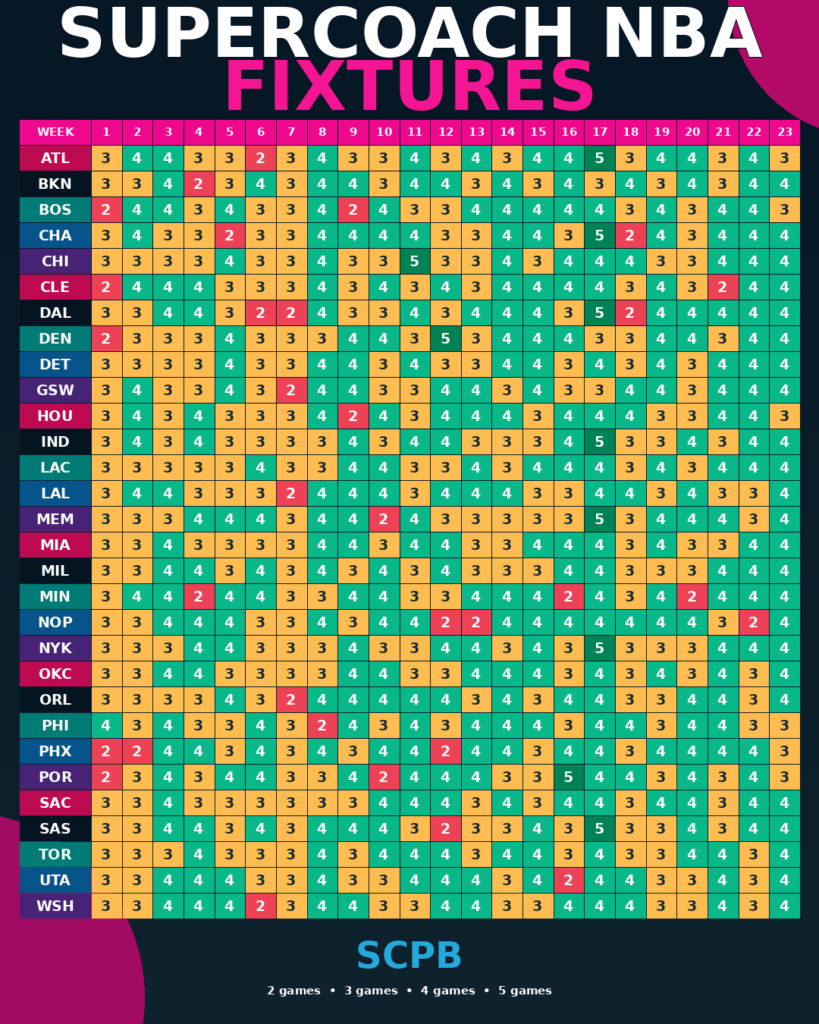
Welcome to the 2026–27 NBA SuperCoach season.
We are ready to be hurt again, too.
Leave a Reply
You must be logged in to post a comment.